





NODE ONE
The remote sensor that measures the actual room temperature
-

Connected
Direct L2D1 radio connection with FLOW thermostatic heads, without a gateway or LoRaWAN network
-

Controlled temperature
Measures the temperature at a distance from the radiator, for more precise control and greater occupant comfort
-
High-performance battery
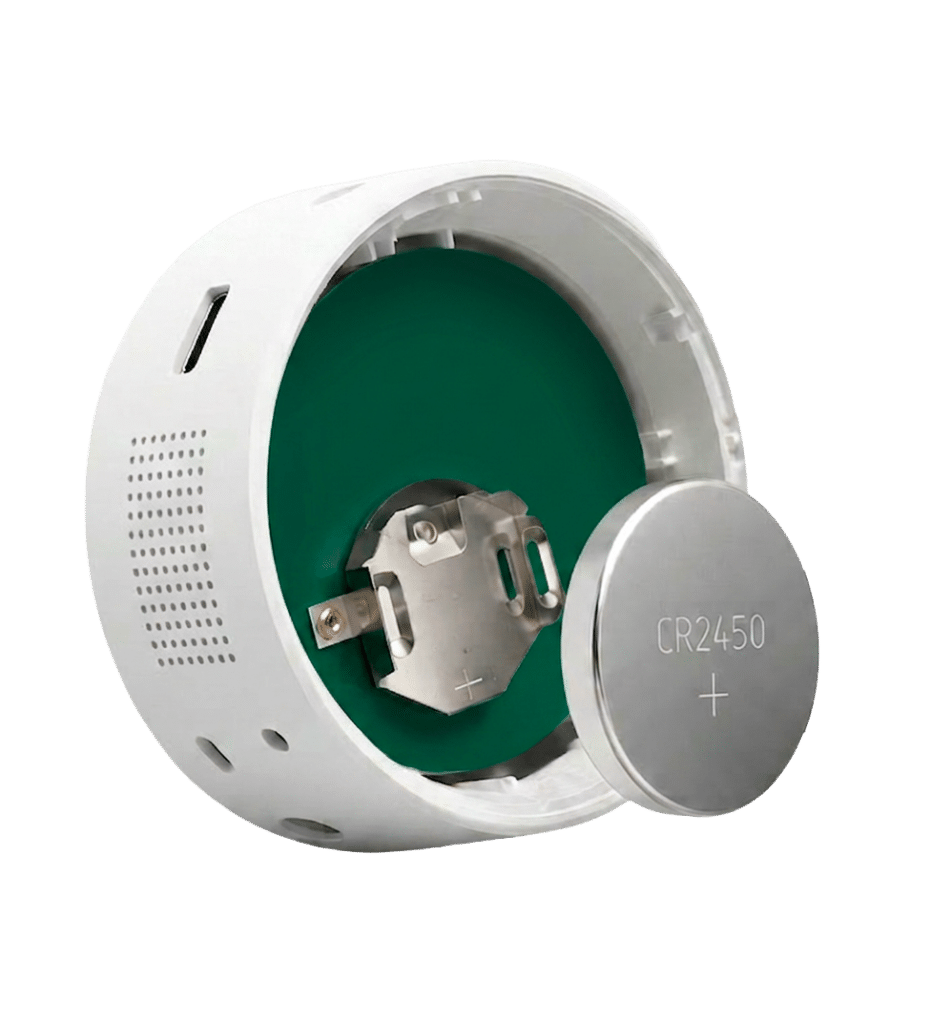
Up to 12 years of battery life (1) with 1 replaceable lithium battery
-
Temperature
-

L2D1
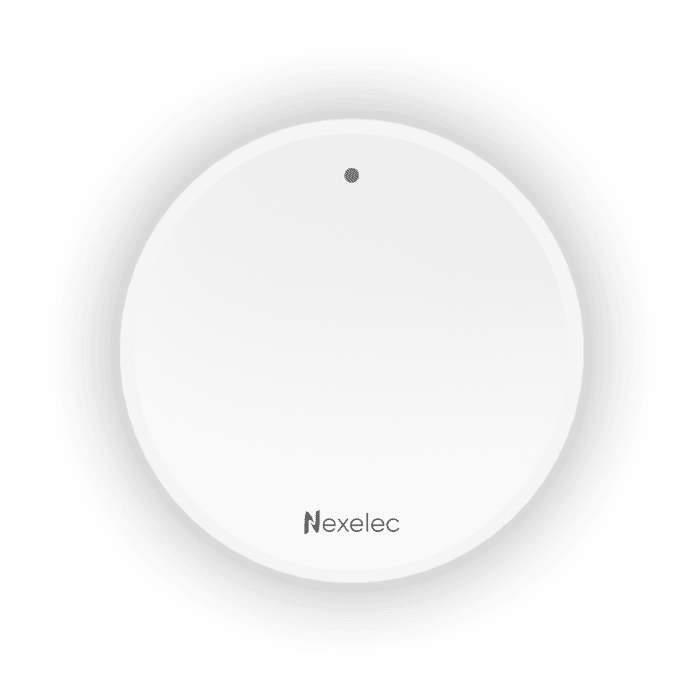


Measure more accurately. Control more precisely. Improve comfort.
NODE complements FLOW thermostatic heads by measuring the actual room temperature, away from disturbances caused by the radiator. Thanks to its direct L2D1 wireless connection, it transmits the measurement locally to the thermostatic heads to improve control accuracy.
-

Precision sensor to ensure reliable regulation and a temperature in line with the setpoint
-

Regular temperature monitoring to adjust regulation more accurately over time
-
Runs on a single replaceable CR2450 lithium battery to reduce maintenance interventions
-

Local communication with FLOW thermostatic heads, without a gateway or LoRaWAN network
-
One NODE sensor can control up to 15 thermostatic heads in the same space
-
Measurement accuracy validated by an accredited metrology laboratory






Reliable measurement for effective control
In a building, the temperature measured at the radiator is often skewed by heat from the radiator itself, sunlight, or the immediate surroundings. NODE measures the actual temperature of the room to improve temperature control and comfort.
NODE: The Reference Temperature for Building Automation Systems
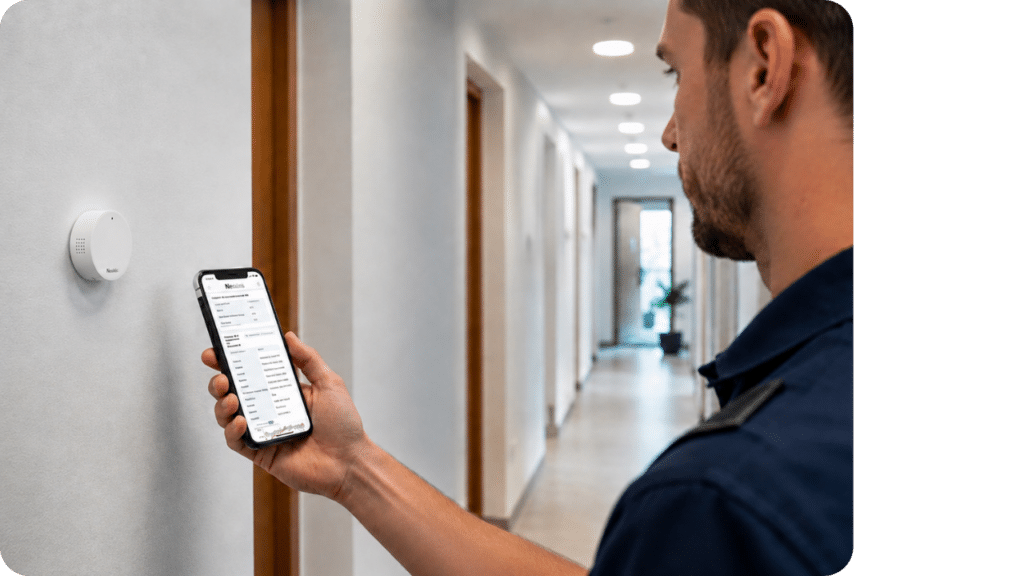
Much more than just a temperature sensor, NODE provides the Building Management System (BMS) with a reliable and accurate measurement of actual room conditions. When positioned in the most appropriate location, it eliminates measurement biases caused by proximity to the radiator and ensures a more accurate reference temperature for control purposes.
Thanks to this high-quality temperature data, building operators have a more accurate picture of occupants’ thermal comfort and can optimize heating strategies on a building-wide scale. NODE thus improves the accuracy of room-by-room control, enhances the performance of the building management system, and helps reduce energy consumption.
The right sensor, in the right place
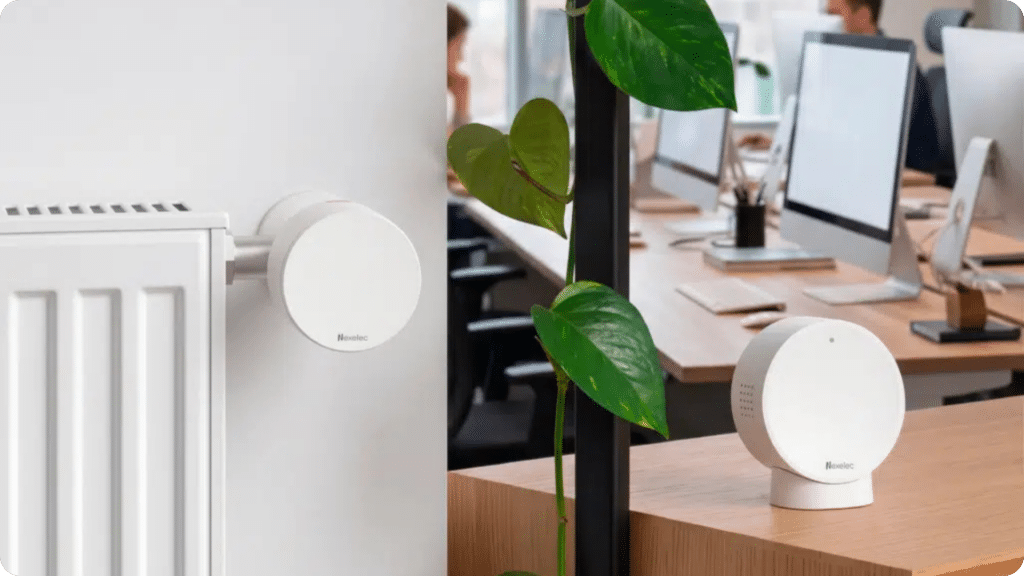
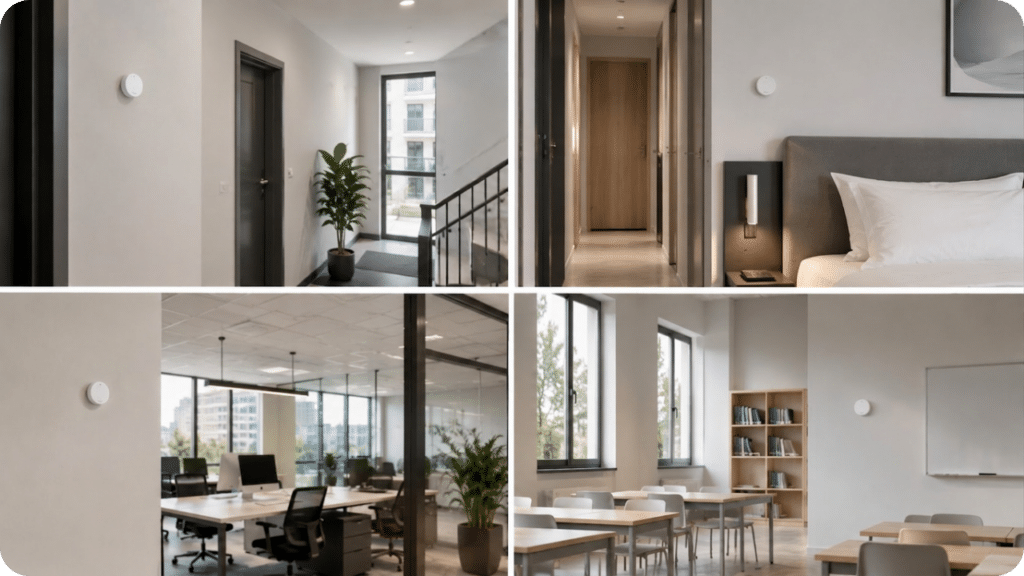
The temperature measured by thermostatic heads at the radiator may be distorted by convection, exposure to sunlight, a curtain, a shelf, or a draft.
NODE is placed directly in the room to measure a temperature that more accurately reflects actual comfort levels.
The control provided by FLOW thermostatic heads becomes more accurate, more stable, and better adapted to occupancy conditions.
Regular measurements for more precise control
NODE automatically measures the temperature every 10 minutes. This regular monitoring allows the system to adjust over time and maintain a more stable temperature in the room.
This measurement frequency helps improve consistency between the setpoint, the actual perceived temperature, and the behavior of the associated FLOW thermostatic heads.
Certified Accuracy for Commercial Buildings
NODE features a temperature sensor with an accuracy of ±0.4 °C. This performance enhances the reliability of the control system and ensures that the temperature remains within the setpoint range.
Measurement accuracy is verified by a calibration certificate issued by a COFRAC-accredited metrology laboratory, a key factor for buildings where temperature reliability is critical to operations.
L2D1: Direct wireless connection between NODE and thermostatic heads
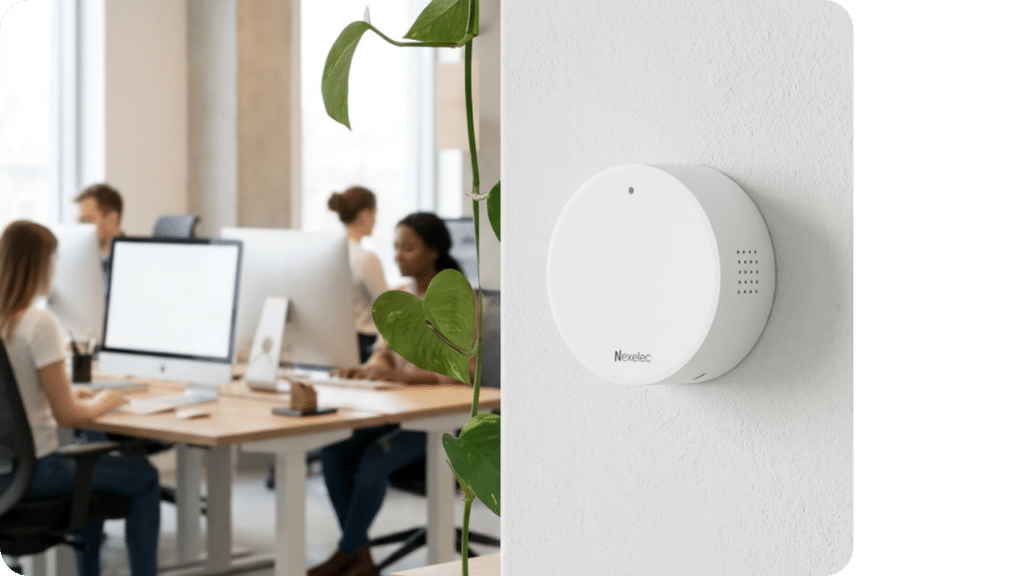
The Nexelec L2D1 radio protocol enables direct local communication between NODE and FLOW thermostatic heads. This connection operates without a gateway or a LoRaWAN network.
NODE thus transmits the room temperature directly to the associated FLOW thermostatic heads. Control remains local, responsive, and independent of the building’s network infrastructure.
A single sensor for multiple radiators in the same room
In some rooms, multiple radiators may be equipped with thermostatic heads.
NODE can transmit its readings to up to 15 FLOW thermostatic heads to coordinate temperature control based on a single room temperature.
This multi-radiator control system allows for better coordination of a room’s heating and prevents each radiator from regulating based on a different local reading.
Easy installation, flexible positioning
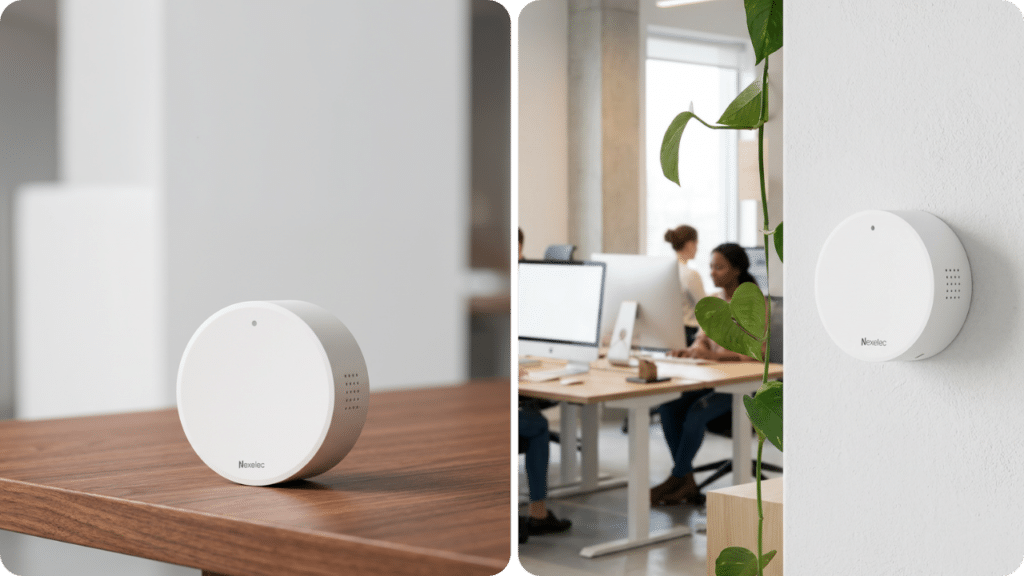
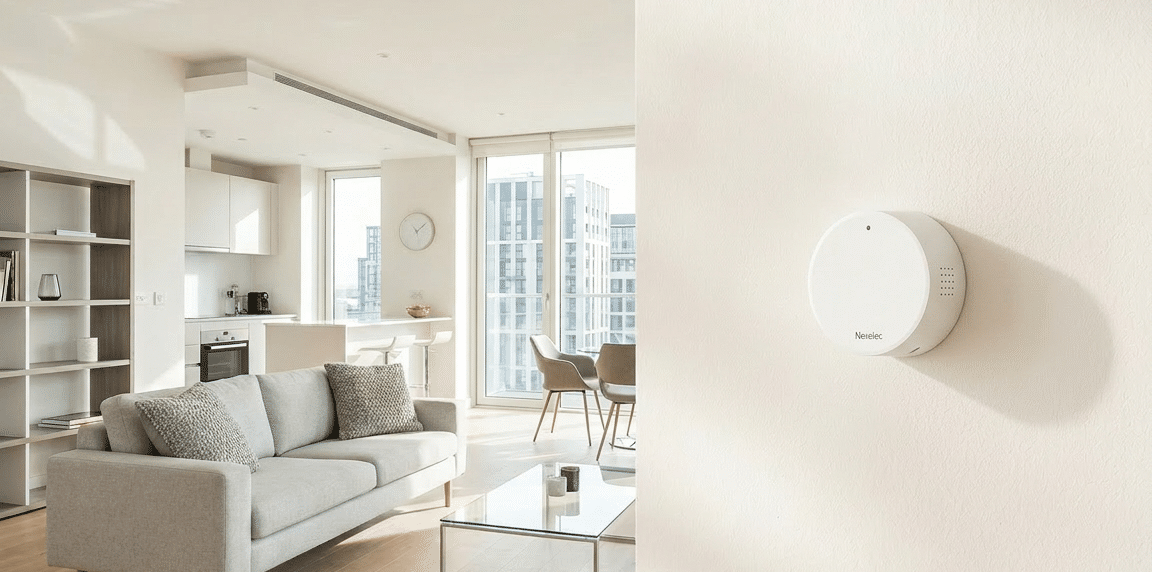
NODE can be freestanding or wall-mounted, depending on the room’s layout. This flexibility makes it easy to place it in the right spot, away from heat sources or areas with interference.
Pairing with FLOW thermostatic heads is simplified thanks to a dedicated button, which speeds up on-site commissioning.
Anti-tear detection
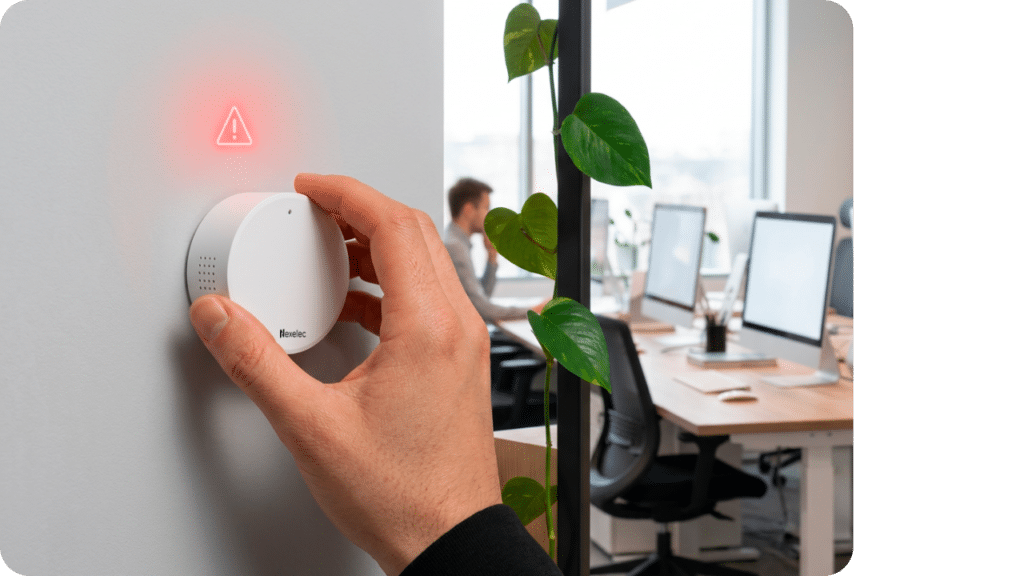
NODE triggers an alert if the sensor is removed from its mounting base. This feature allows you to quickly identify an unexpected removal, improper handling, or a field intervention that needs to be verified.
In multi-unit buildings, this information helps maintain service quality and ensure the reliability of the measurements used for control purposes.
Up to 12 years of battery life with just one lithium battery
NODE runs on a replaceable CR2450 lithium battery and can last up to 12 years*. This long battery life reduces the need for on-site maintenance and simplifies the management of large fleets.
Choosing a replaceable battery also helps extend the product’s service life without having to replace the entire sensor.
Specifications
-
Temperature
Res. : 0.1°C
Previous: ±0.4°C
Features
-
Connectivity
-
-
Power supply
1 CR2450 battery
-
Dimensions
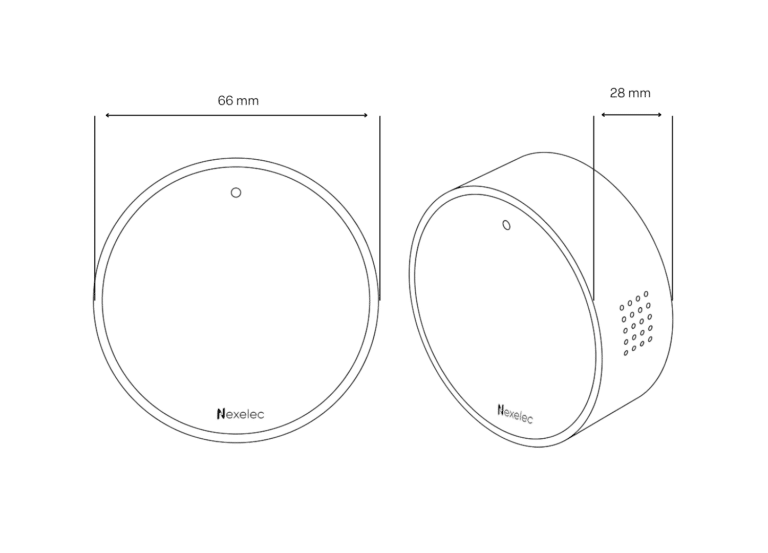
28 x 66 mm
-
Terms of use
Indoor environment
Temperature: -20°C to +60°C
Humidity: 0% RH to 99% RH (non-condensing)
-
Warranty
2 years*
-
Certifications
-
-
Set contents
1 NODE remote temperature sensor
1 CR2450 lithium battery
1 anti-theft screw
2 screws and dowels
1 adhesive fastener


Reference
| Reference | Radio |
|---|---|
| X100FK | L2D1 (868 MHz) |
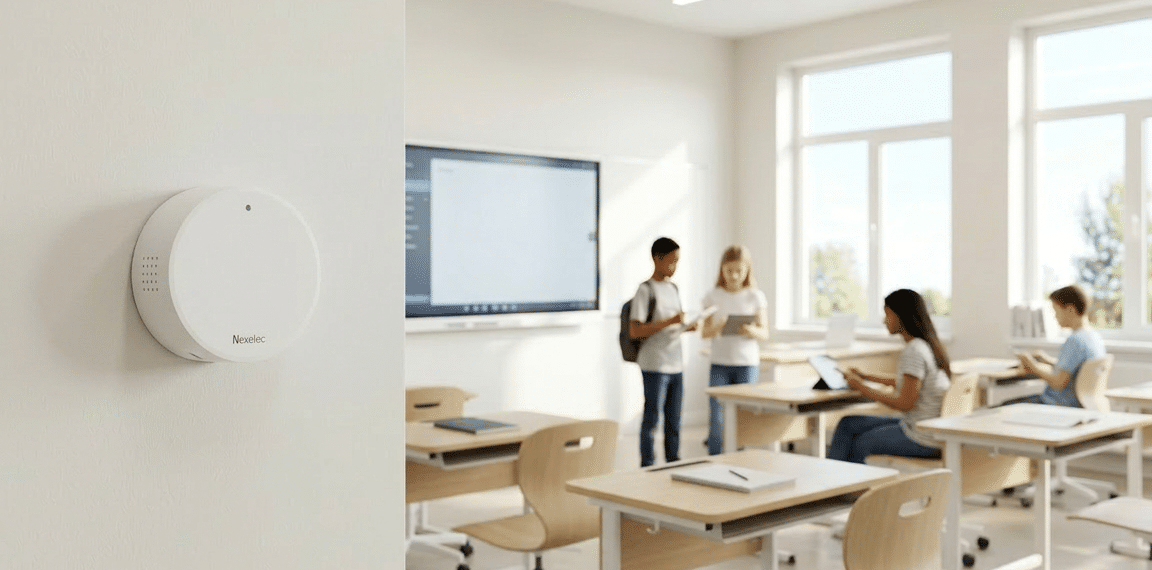
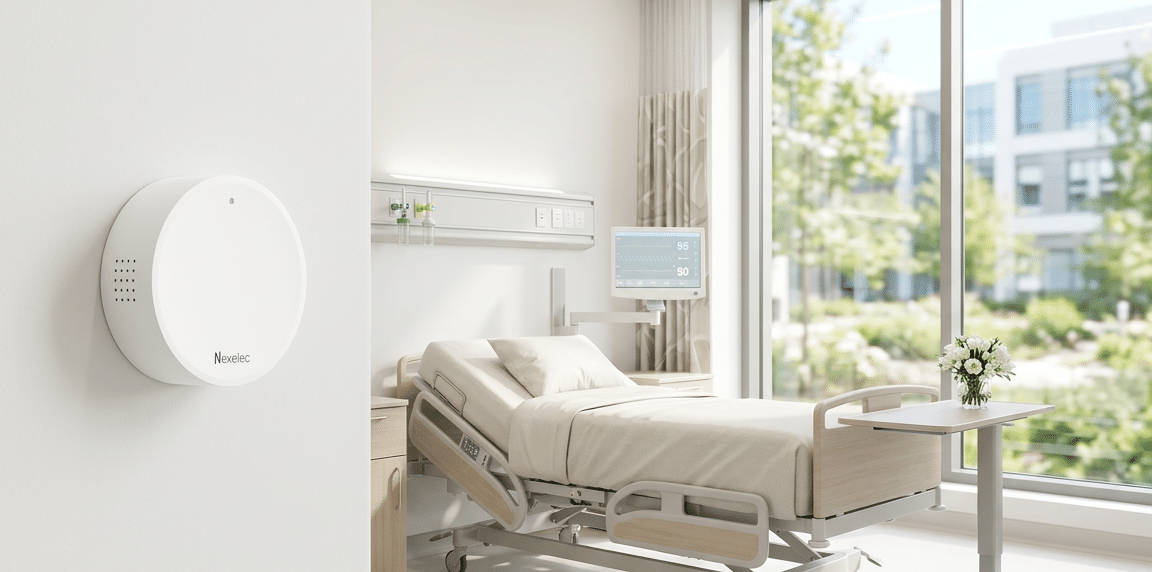
A solution for buildings where temperature control is essential
Measure the actual room temperature to improve occupant comfort and reduce control deviations.
Maintain a more consistent temperature in rooms, regardless of radiator location.
Improve heating control in occupied areas, meeting rooms and shared spaces.
Ensure more reliable temperature measurement in high-use environments with varying occupancy.
Provide more reliable measurement in rooms where thermal stability contributes to occupant comfort.
A sensor built to last
Nexelec’s commitment to more responsible electronics is part of a structured CSR approach, recognized by the company’s achievement of the EcoVadis Bronze medal.
NODE aligns with this approach through a replaceable battery, sustainable installation, simplified maintenance, and a design intended to extend the product’s service life.
The ease of battery replacement and fleet monitoring help minimize premature replacements and unnecessary service calls.

Designed to blend into interior spaces
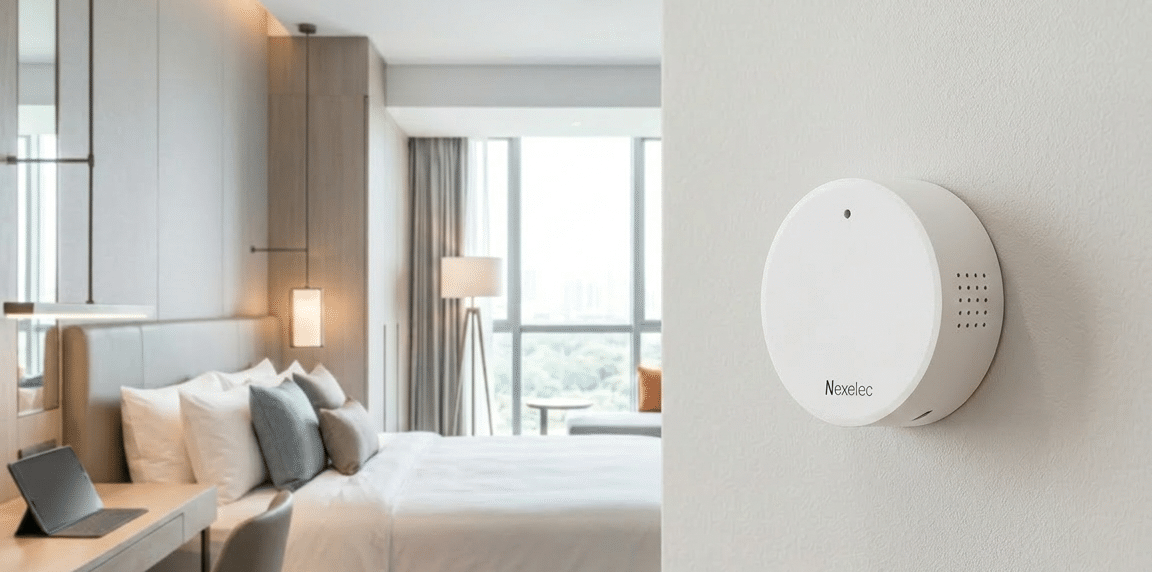
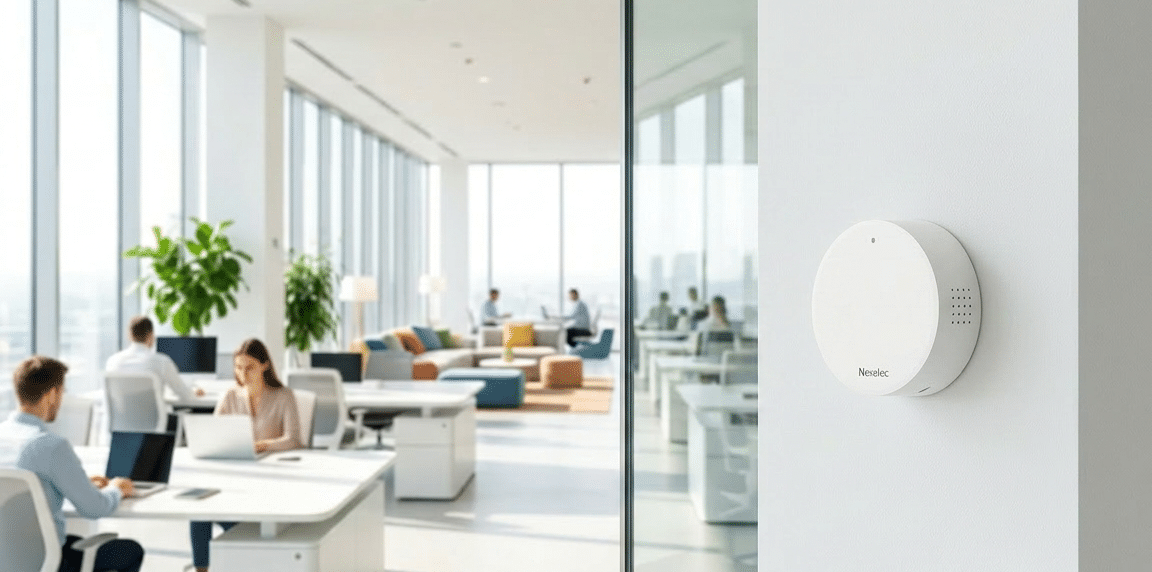
With its compact size and understated design, NODE fits easily into homes, hotels, offices, and multi-unit buildings.
It can be placed anywhere or mounted on the wall to measure the temperature in the right spot, without interfering with the room’s daily use.
* Battery life is not guaranteed and may vary depending on settings, product usage, and operating conditions.